“The chef could drive it," Alonso offers his first verdict on 2026 F1 cars after Bahrain test
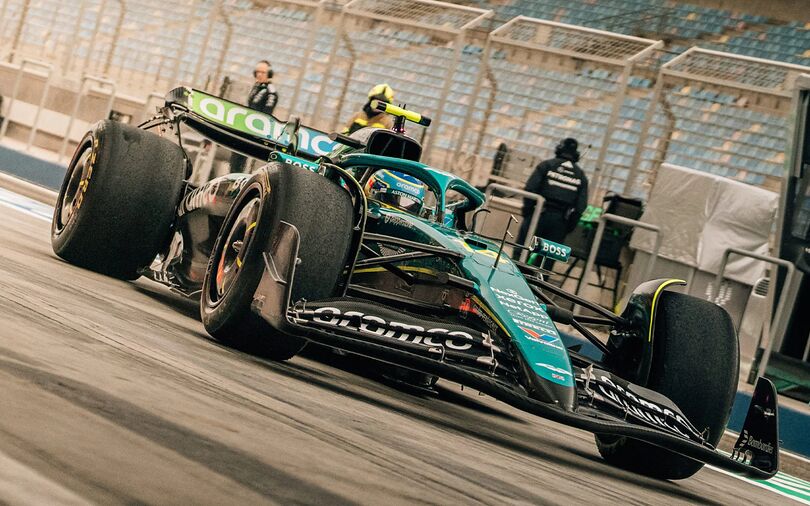
Fernando Alonso has offered his first in‑depth assessment of Formula 1’s radically redesigned 2026 cars following the opening three‑day pre‑season test in Bahrain — and he did so with trademark humour.
While acknowledging the sport’s evolution, the two‑time World Champion made clear that the new regulations have dramatically changed the driving experience, reducing cornering speeds and shifting the emphasis toward energy management.
Reflecting on the first laps of the AMR26, Alonso said the new regulations have fundamentally altered how drivers approach the car, especially in high‑speed sections that once rewarded bravery and precision.
“We need to wait a couple of races to see how these regs work when we are all together and how racing becomes. Definitely on the pure driving, I said last week at the car launch that, you know for me, the late '90s and the early 2000s will be unbeatable in terms of driving adrenaline and pure skills from a driver point of view because you wanted to drive fast in the corners and find the limits of the car.”
He pointed to Bahrain’s iconic Turns 10–12 as a prime example of how the new rules have slowed the cars dramatically.
“Here in Bahrain has been historically, 10/12, a very challenging corner, so you used to choose your downforce level to go 10/12 just flat… It was a driver skill, you know, a decisive factor to go fast in a lap time.”
“The chef can drive the car” — Alonso on the pace dropUnder the 2026 regulations, drivers now take the same sequence far slower to preserve battery energy for the straights — a shift Alonso finds both surprising and concerning.
“Now in 10/12 we are like 50kph lower because we don't want to waste energy there, and we want to have it all on the straights. So you do 10/12, instead of 260, at 200. The chef can drive the car in 10/12 at that speed, but you don't want to waste energy, because you want to have it on the straight.”
The joke landed, but the message behind it was serious: the new rules risk reducing the role of driver skill in key parts of the lap.
Alonso said he fully understands why Max Verstappen has been vocal about the new regulations, noting that drivers naturally want to make the difference in the corners — something the 2026 cars make far more difficult.
“So I understand Max's comments, because from a driver you would like to make the difference in the corner, driving those five kilometres faster, but now you are dictated by how much energy your engine will have on the next straight.”
Despite his criticisms, Alonso acknowledged that Formula 1 has always involved trade‑offs — whether it was downforce in previous eras or energy deployment today.
“But at the same time, this is Formula 1, and it has always been like that. Now it is the energy. Last year or two years ago, when he [Max] won all the races, it was the downforce.
"He could go in the corners at 280 and we could go in the corners at 250 because we didn't have the downforce. So, you know, at the end of the day this is Formula 1. We close the visor, we go and this is the same motor racing.”