F1 EXPLAINED: Things to know about the new 2026 F1 tyres
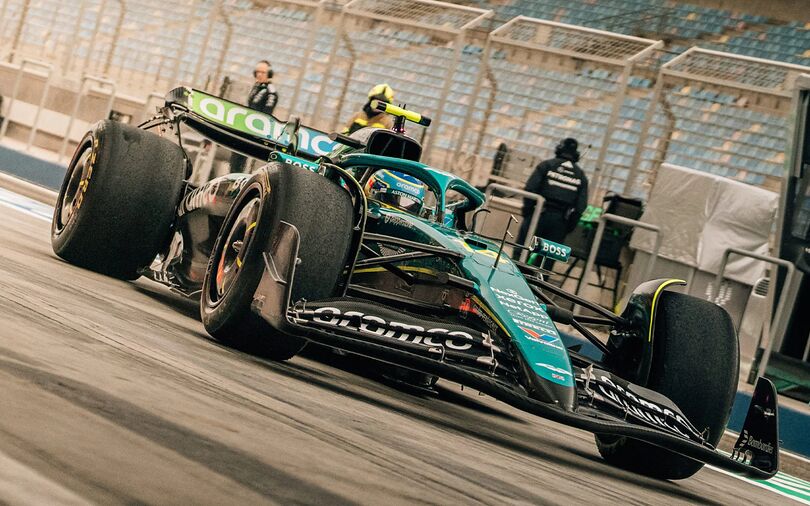

The 2026 Formula One season will introduce a redesigned generation of tyres that have been engineered to complement the sport’s new aerodynamic and power‑unit regulations.
Pirelli has developed these tyres to suit cars that will be lighter, narrower, and more aerodynamically efficient than the current generation.
The updated tyre construction reflects Formula One’s broader objective of creating vehicles that are more agile and more energy‑efficient, while still maintaining the performance characteristics expected at the highest level of motorsport. Early testing has already provided valuable insights into how these tyres will influence handling, strategy, and overall race dynamics.
1. Reduced Tyre Width and DiameterThe most immediately noticeable change to the 2026 tyres is the reduction in both width and external diameter. Pirelli has confirmed that the front tyres will be 25 millimetres narrower than the current specification, while the rear tyres will be 30 millimetres narrower. The external diameter will also decrease from 720 millimetres to a range between 705 and 710 millimetres.
These dimensional reductions are closely aligned with Formula One’s goal of producing smaller and lighter cars. Narrower tyres reduce unsprung mass, which improves responsiveness and contributes to the FIA’s overall weight‑reduction target.
The smaller diameter lowers rotational inertia, allowing the tyres to change direction more quickly and improving the car’s agility. At the same time, the reduced contact patch decreases mechanical grip, which is consistent with the FIA’s intention to shift more of the car’s performance balance toward aerodynamic efficiency and active aero systems.
2. Adaptation to new aerodynamic loadsThe 2026 aerodynamic regulations will significantly alter the forces acting on the tyres. The introduction of cornering and straight-line mode, combined with a reduction in ground‑effect downforce, will create a more variable load profile than teams experience today.
As a result, the tyres must be capable of maintaining stability during rapid transitions between high‑downforce cornering phases and low‑drag straight‑line phases.
Pirelli has emphasized that the new tyres must withstand these changing loads without compromising performance or safety. The first prototypes were tested at the Circuit de Barcelona‑Catalunya, where conditions were chosen to replicate the aerodynamic environment expected in 2026.
These tests allow engineers to evaluate carcass stiffness, heat generation, and structural behaviour under the new load patterns. The reduced aerodynamic wake of the 2026 cars may also improve tyre performance in traffic by reducing the thermal instability that currently affects cars running closely behind one another.
3. Revised Compound Range and the Removal of the C6Pirelli will continue to offer five dry‑weather compounds in 2026, but the softest C6 compound will be removed from the range. This decision reflects Formula One’s desire to simplify tyre selection and reduce waste as part of its long‑term sustainability strategy.
The remaining compounds will be rebalanced to suit the lower‑downforce cars. The softest compounds will be engineered to provide strong warm‑up performance despite the reduced vertical load, while the harder compounds will be optimized for durability under the new hybrid energy‑flow architecture.
These adjustments ensure that the tyres remain compatible with the unique demands of the 2026 power units, which will rely more heavily on electrical energy and will therefore influence how heat is generated and dissipated through the tyres.
4. Updates to Wet and Intermediate TyresPirelli has also developed revised wet‑weather tyres for the 2026 season. These updates are intended to improve performance in heavy rain and to reduce the need for tyre warmers, which aligns with Formula One’s broader sustainability objectives.
The new wet and intermediate tyres are expected to evacuate water more efficiently, maintain grip across a wider temperature range, and resist overheating on a drying track.
These improvements are designed to give drivers greater confidence in variable weather conditions and to reduce the likelihood of excessive degradation during extended wet‑weather running.