F1TECH: Why Mercedes’ Hywel Thomas claims the sport faces its greatest engineering challenge
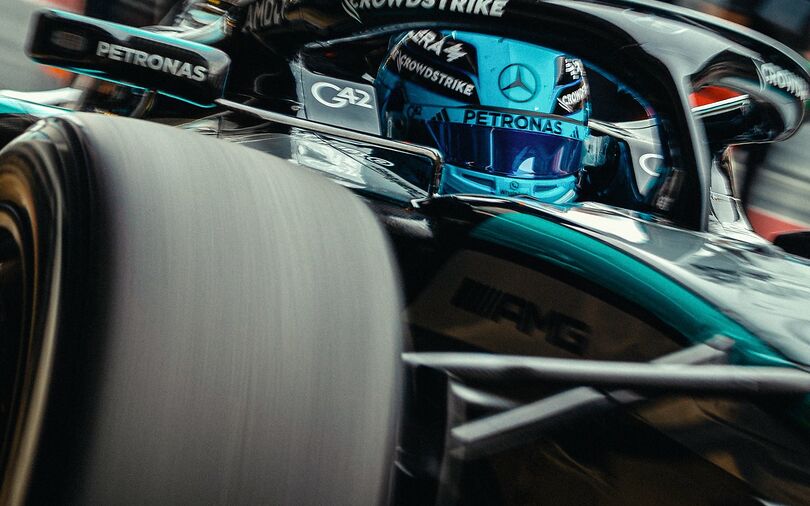
Formula 1 is preparing for the most dramatic transformation of its power units since the introduction of the hybrid era in 2014. The regulations that will come into force in 2026 do not simply refine the existing framework; they fundamentally redefine how an F1 car generates, stores, and deploys energy.
For Mercedes AMG High Performance Powertrains (HPP), the group responsible for some of the most successful engines in the sport’s history, the new rules represent a challenge of unprecedented scale.
Hywel Thomas, the Managing Director of Mercedes AMG HPP, has described the upcoming era as “not merely an evolution; it’s a revolution.”
His assessment reflects the magnitude of the engineering overhaul required to meet the FIA’s new objectives, which combine sustainability, electrification, and performance in a way that no motorsport series has attempted before.
A New Energy Balance That Redefines the Power UnitOne of the most significant changes in the 2026 regulations is the requirement for a near equal split between internal combustion power and electrical output. This mandate forces teams to rethink the entire architecture of the power unit.
The removal of the MGU H, the component that previously harvested exhaust energy and eliminated turbo lag, means that engineers must now find new ways to stabilize turbocharger behavior and maintain consistent power delivery.
In the absence of the MGU H, the MGU K becomes the central hybrid component. Its output will increase from 120 kW to 350 kW, a dramatic escalation that places far greater demands on the battery, the energy recovery systems, and the cooling architecture. The electrical system alone will produce nearly 470 horsepower, which is more than the entire output of an F1 car from the early 2000s.
This shift requires teams to develop far more aggressive braking based energy recovery strategies and to manage battery charge and discharge cycles with extraordinary precision.
Thomas has emphasized that this convergence of new hybrid requirements and the loss of the MGU H creates a level of complexity that his engineers have never encountered before.
Sustainable Fuel Introduces a New Combustion ChallengeAlongside the hybrid overhaul, Formula 1 will adopt fully sustainable, drop in fuels beginning in 2026. PETRONAS, Mercedes’ long standing technical partner, is developing a fuel that matches current performance levels while significantly reducing lifecycle carbon emissions.
Although the fuel is designed to be compatible with existing engine concepts, its chemical properties differ from traditional fossil based fuels in ways that directly affect combustion behavior.
So Toto, what impact will the new regulations have? 💭
— Mercedes-AMG PETRONAS F1 Team (@MercedesAMGF1) February 2, 2026
Sustainable fuels typically exhibit different flame speeds, knock resistance characteristics, and energy densities. These differences require engineers to redesign ignition strategies, adjust injection timing and pressure, and refine the geometry of the combustion chamber. The internal combustion engine must continue to deliver competitive power despite contributing a smaller share of the total output and operating with a fuel that behaves differently under high load.
Thomas has described the integration of sustainable fuels as a challenge that intersects with every other aspect of the power unit’s redesign, making it one of the most demanding elements of the 2026 project.
Thermal Management Becomes a Central BattlegroundThe combination of increased electrical power, the absence of the MGU H, and the introduction of new fuel chemistry places unprecedented stress on the power unit’s thermal systems. Mercedes has stated that the new power unit has been tightly integrated with the W17’s cooling architecture and aerodynamics to ensure consistent performance across all phases of a lap.
This integration is essential because the battery, the MGU K, and the turbocharger will all operate under more extreme conditions than before. At the same time, the 2026 chassis regulations will reduce downforce and limit the airflow available for cooling.
As a result, teams can no longer treat cooling as a separate subsystem. Instead, it must be embedded into the aerodynamic concept of the car from the earliest stages of design.
A New Development Philosophy Driven by Speed and EfficiencyPerhaps the most revealing aspect of Thomas’s comments is his focus on the pace of development. The complexity of the 2026 power unit means that traditional long testing cycles are no longer feasible.
Teams must rely more heavily on simulation, digital modeling, and rapid iteration to keep pace with the demands of the new regulations.
Thomas has explained that Mercedes must “design, simulate, validate, and refine in tighter intervals,” because efficiency has become “mission critical—both on the dyno and the track.”
This shift signals a broader transformation in how Formula 1 teams operate. Success will depend on the ability to integrate chassis and power unit development, to shorten design loops, and to learn from real time data more quickly than ever before.